


MyWordz® User Guide:
Access the MyWordz® User Guide for Educators on this page and watch videos.
We can’t explicitly teach the whole alphabetic code. If you don’t know it, MyWordz® shows it.
MyWordz® is the only technology that shows which letters form the graphemes and their sound values, using Phonemies® as phonetic symbols for kids.
Use MySpeekie® as a one-screen AAC.
Type the sounds. See the spelling. Tap ‘Voice’ to say the word(s) aloud!
Also great for checking phonemic awareness and as a spellchecker.
Phonemies® are phonetic symbols for children. They don’t need to know the IPA or any graphemes. They type the Speech Sound Monster® sounds they hear in the word.
Avery voices 'I Love You' without knowing any of the letters (graphemes)
Educators who value personalised, child-centred learning, rich oral language, reading for pleasure, hands-on multisensory experiences and having fun will love exploring speech sounds and Speech Sound Pics® with Phonemies®, helping children connect speech, print and meaning in ways that are engaging, purposeful and memorable.
You can Show the Code to children who do not speak English as a first language! MySpeekie®,, the world's first one-screen AAC, has so many uses!
Speech Sound Symbols are a game-changer! Use the Phonemies keyboard while learning them. There is a Phonemies keyboard in MyWordz and also the Monster Spelling Piano app.

PRINT → SPEECH
In reading, pupils are taught to decode by identifying graphemes in written words from left to right, saying the corresponding phonemes, and blending those phonemes to say the whole word (Department for Education, England, 2023, p. 47). The Australian Curriculum similarly requires Foundation students to “blend sounds associated with letters when reading CVC words” (Australian Curriculum, Version 9.0, English, AC9EFLY12).
That requires students and teachers to know:
-
Which letters form the graphemes?
-
How many graphemes?
-
Which phoneme value does each represent?
MyWordz® technology SHOWS them this. Also helpful for parents to know!
SPEECH → PRINT
In spelling, pupils are taught to say a word clearly, segment it into phonemes, and select graphemes to represent each phoneme in writing (Department for Education, England, Writing Framework, 2025, p. 41). The Australian Curriculum similarly requires Foundation students to “write consonant–vowel–consonant (CVC) words by representing sounds with the appropriate letters” and to “use knowledge of letters and sounds to spell words” (Australian Curriculum, Version 9.0, English, AC9EFLY12 and AC9EFLY13).
That requires students and teachers to know:
-
Which phonemes?
-
How many phonemes?
-
Which graphemes represent them?
MyWordz® technology SHOWS them this. Also helpful for parents to know!


Use the tech to figure out to 'sound out' the word for your child. Which letters, which sounds?

Say a word, see the spelling.
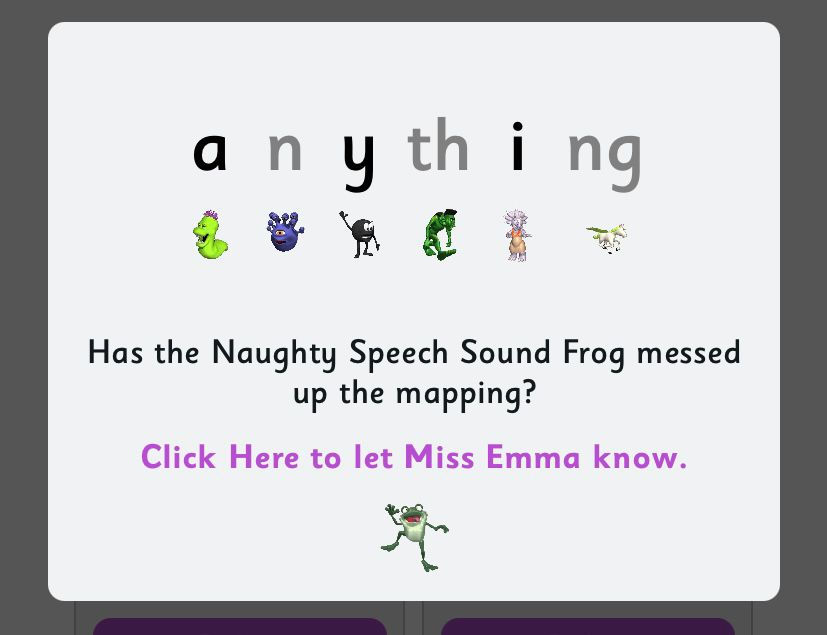
The word will be shown. Click ‘Check Mapping’ to see which letters are graphemes, and the Phonemies® show their sound value. A great way to check 'sight words'.
You may not understand them, but children do, as they tell them INSTANTLY what the sound value is. And they’ve just said the word, so they know how it’s pronounced.
Remember that Phonemies do not link with letters UNTIL they’re in the word. They are 'sound symbols'. They represent the P part of the Grapheme-Phoneme Correspondence.

.png)
Type a word, see the spelling to know how it's pronounced.
The word will be shown. Click ‘Check Mapping’ to see which letters are graphemes, and the Phonemies® show their sound value.
Double-check that your brain has processed the word mapping by typing the sounds into MySpeekie® and checking the word.

Type the sounds, see the word. Hear it voiced.
Type the sounds into MySpeekie® to see the spelling.
Even three-year-olds can generate and see the correct spelling of any word they choose!

Type the Phonemies® to check the pronunication of graphemes in Mapped Words®
Do this with 1,2,3 and Away! Books, Silly Spell-O etc.
Avery knows the sounds so can use the Monster Mapped version if unsure of a word.
If he didn't he would use the Phonemies screen.
Rory screened as being at high risk of dyslexia. Dyslexia Re-Routed!
Become familiar with 'reading' long before knowing the Core Code.
"Follow the Sounds to Say the Word!"
Even three-year-olds can do this, and it addresses the very issues identified in children at risk through Dys-Code® screening. Amari is using the Speedie Readies resources.

Use 'Map and Drag' to create mapped words, download and print!

"Follow the Monster Sounds to Say the Word"! Using Duck Hands, Developing Phonemic Awareness.

Children can develop phonemic awareness and phonological working memory in the early years, before graphemes are introduded. Xavier has figured out where his Mum is going, as she laid out the 13 Phonemies for him using Monster Spelling Tiles!
There are too many correspondences to teach explicitly, so learn the Monster Sounds, use MyWordz word mapping technology and display the Spelling Clouds!


MyWordz® Word Mapping Technology

-
Code Mapping® → shows which letters are graphemes.
-
Monster Mapping® → also shows their sound values using Phonemies®.
Pricing Options -
💻 Web Version: £75 per year (introductory offer)
-
Create your account at https://MyWordz.tech
This includes full access to MySpeekie®
You can manage licences and add app access within your account for £5.75 per device
Log in using your MyWordz® account to activate
📱 App Version: £134.95 one-time purchase -
App Store: https://apps.apple.com/us/app/mywordz-with-myspeekie/id6737770129
-
Google Play: https://play.google.com/store/apps/details?id=com.thereadinghut.mywordz